


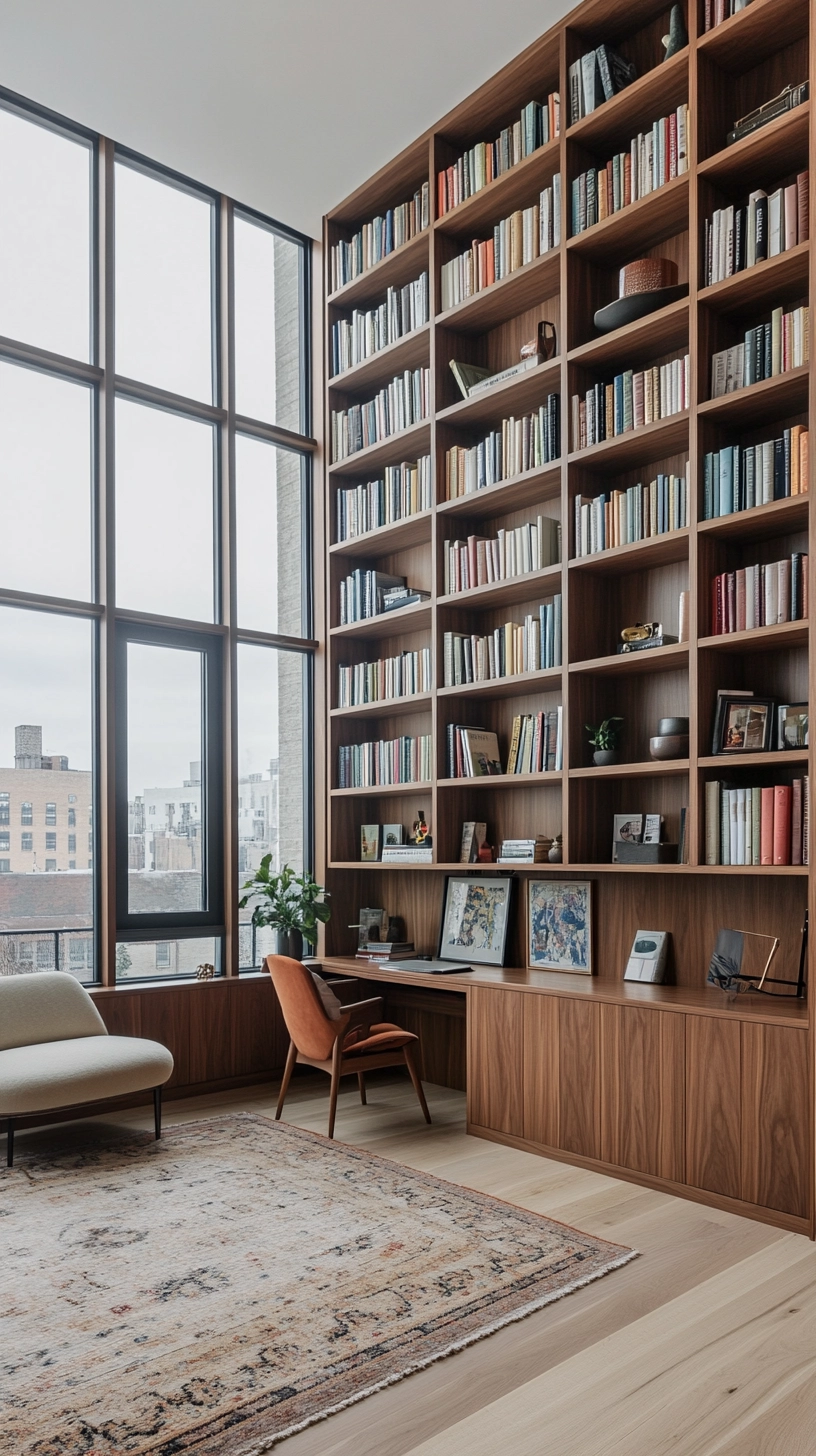
A bookshelf can look beautiful and still be frustrating to use. Books that protrude, shelves that swallow small paperbacks, and furniture that blocks a walkway are usually signs that the depth was chosen before the contents were measured. For a mixed home collection, an internal shelf depth of about 10–12 inches is a useful starting point. The right answer depends on the largest books, the room and the construction of the bookcase.
Bookshelf depth at a glance
| What you store | Suggested usable depth | Design note |
|---|---|---|
| Small paperbacks | 7–9 in (18–23 cm) | Measure larger trade paperbacks separately. |
| Mixed novels and hardcovers | 10–12 in (25–30 cm) | A versatile starting point for home libraries. |
| Oversized art books and albums | 12–16 in (30–41 cm) | Check individual book dimensions; some are larger. |
| Decorative objects and baskets | 12–16 in or more | Allow room for handles and irregular shapes. |
These are planning ranges, not building-code requirements or load ratings. IKEA’s BILLY range, for example, includes bookcases with an overall depth of 11 inches, illustrating why a relatively shallow unit can be practical for everyday books. Usable interior depth may be smaller than the advertised outside measurement.
Measure your books before choosing a shelf
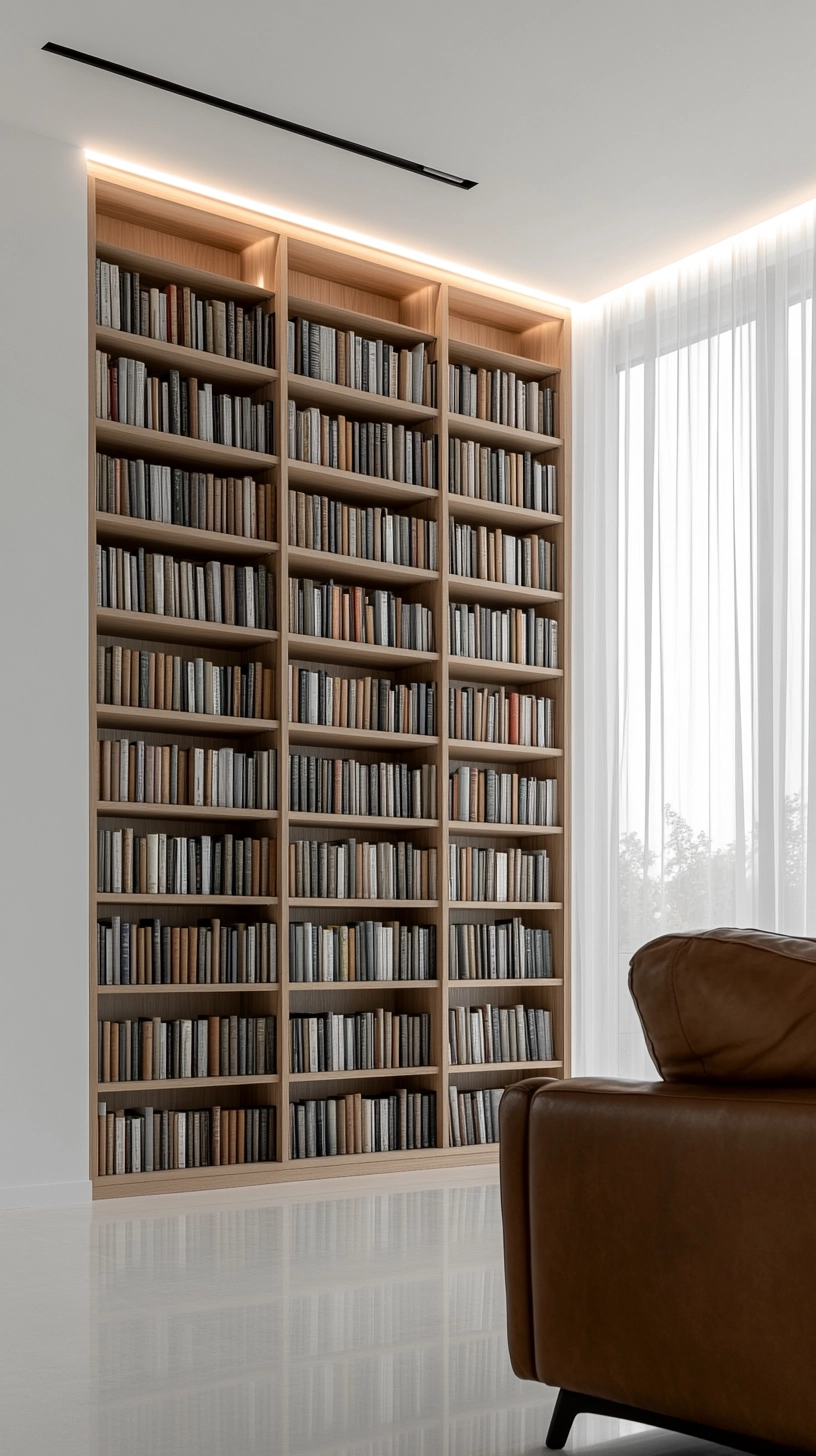
Pull out the deepest book you actually want to shelve upright. Measure from its spine to the outer edge of the cover, then check several similar books rather than using an average. Add a modest clearance, such as half an inch to an inch, so the book does not catch the back or extend past the shelf. If an unusually large atlas drives the depth of every shelf, consider giving it one dedicated compartment instead.
- Measure the book depth, not just its height.
- Check the internal depth from the back panel to the front edge.
- Allow for doors, hinges, face frames or a decorative front lip.
- Test with a cardboard template before ordering custom furniture.
How depth changes the room
A narrow hallway benefits from shallower shelves and an unobstructed route past them. A home office may need deeper lower compartments for binders, while shorter upper shelves can hold novels without overwhelming the desk. In a living room, deep cabinetry below and shallow bookshelves above create an attractive stepped profile. See our small-space bookshelf ideas for layouts that work with limited floor area.
Built-in versus freestanding bookcases
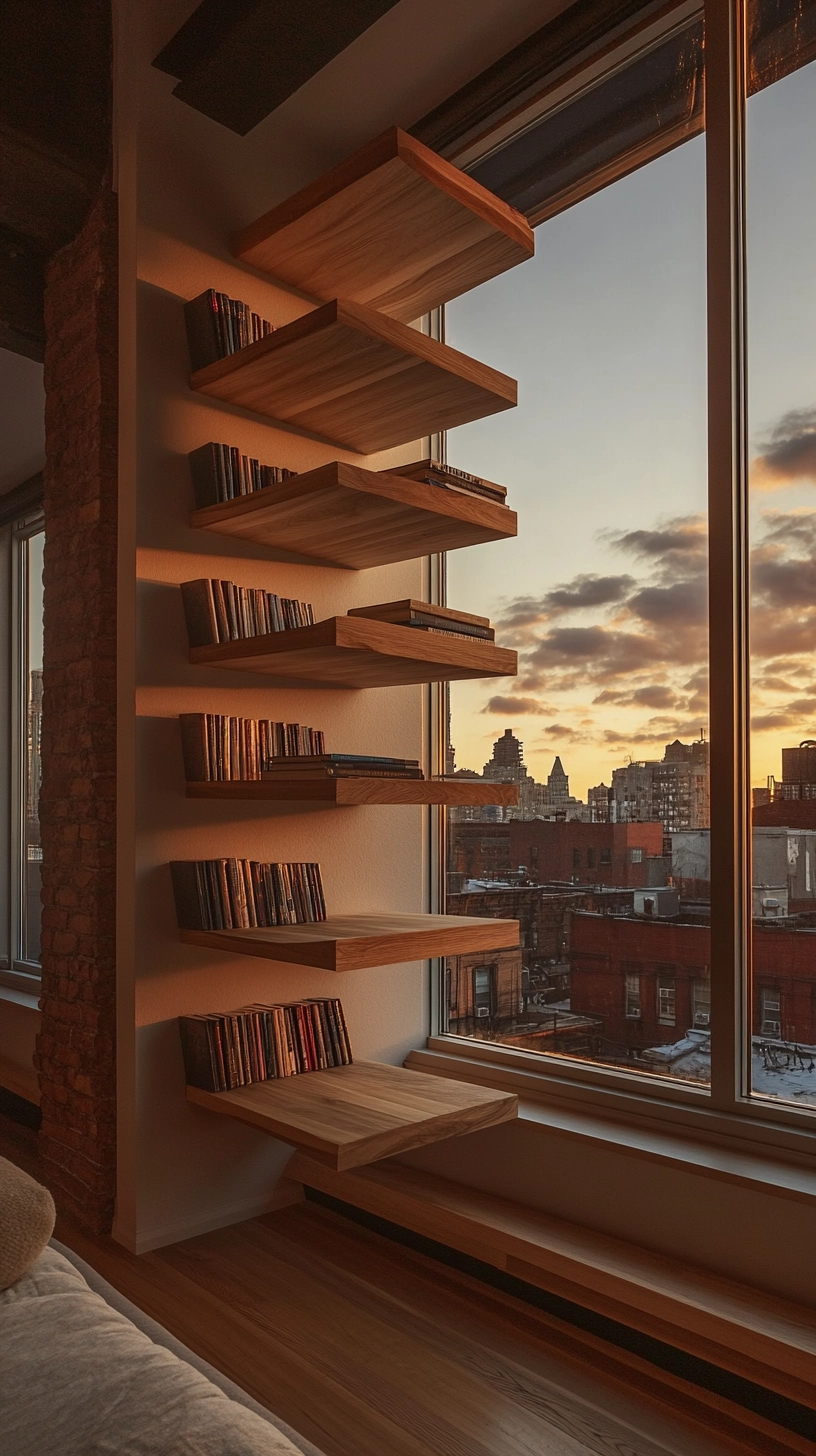
With a built-in, establish the finished wall depth, including skirting boards, pipes and any unevenness. A freestanding bookcase needs its own back, feet or base, which affect exterior dimensions. Double-check the manufacturer’s load limits and secure the unit according to its instructions. The US Consumer Product Safety Commission recommends anchoring bookcases and other furniture to the wall to reduce tip-over risk.
For a larger renovation, explore built-in bookshelf designs before finalizing the cabinet drawings. Do not assume deeper shelves are automatically stronger; unsupported span, material and load matter too.
Common mistakes to avoid
- Ordering based on the exterior depth alone.
- Making every compartment the same depth when books vary widely.
- Forgetting the door swing or walkway clearance.
- Using a deep shelf as an excuse to stack books in two inaccessible rows.
- Choosing an unsupported long shelf without checking deflection.
Frequently asked questions
Is 8 inches deep enough? Often for small paperbacks, but not for every hardcover. Measure your collection first.
Is 12 inches too deep? Usually not for mixed books and decor, provided the furniture fits the room. For very narrow spaces, less depth may be preferable.
Should books touch the back? They do not need to be pushed tightly against it. Leave enough room to handle the books comfortably.
The bottom line
Choose the smallest usable depth that comfortably accommodates your regular collection, with a separate space for oversized books. This balances storage capacity with a room that feels open and easy to navigate.