


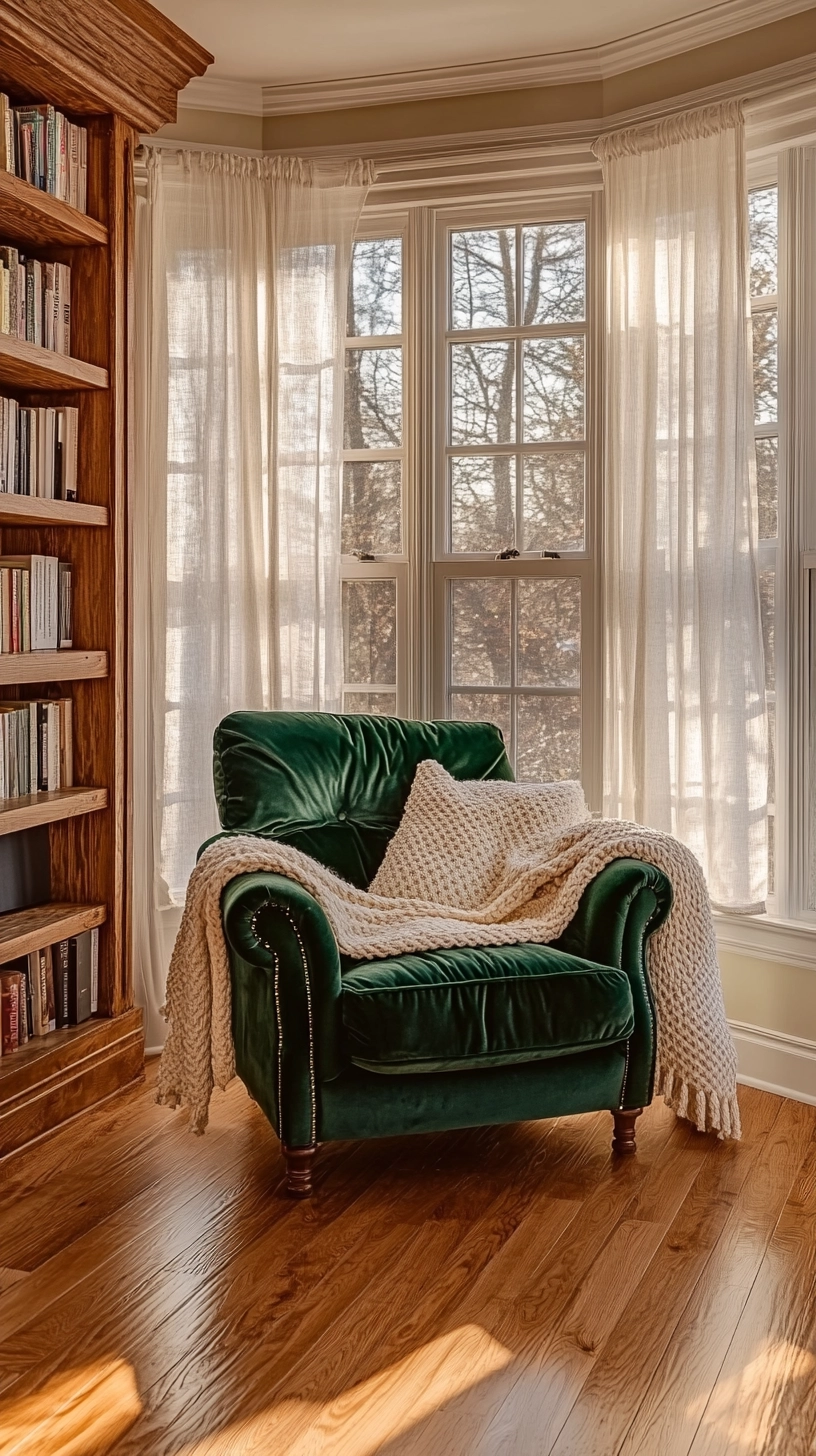
A rug makes a reading nook feel like a separate, comfortable destination instead of a chair pushed into an unused corner. The right size anchors the furniture, gives your feet a soft landing and keeps doors and walkways clear. For a single armchair, a 4 × 6-foot rug is often a useful starting point; smaller and larger arrangements need different dimensions.
Reading nook rug size guide
| Layout | Starting rug size | Placement |
|---|---|---|
| Compact chair corner | 3 × 5 ft | At least the front chair legs or feet area, depending on the layout. |
| Standard armchair | 4 × 6 ft | Ideally under the chair with room in front. |
| Chair and ottoman | 5 × 7 ft or 5 × 8 ft | Aim to include both pieces. |
| Two chairs and table | 6 × 9 ft | Measure the whole furniture grouping. |
| Window bench | 2 × 6 ft runner or 3 × 5 ft | Place in front of the bench without blocking access. |
These are starting points, not rules. Actual furniture footprints, proportions and available floor space take priority. The 4 × 6-foot size is close to the 120 × 170 cm option recommended by rug retailers for many single-armchair layouts.
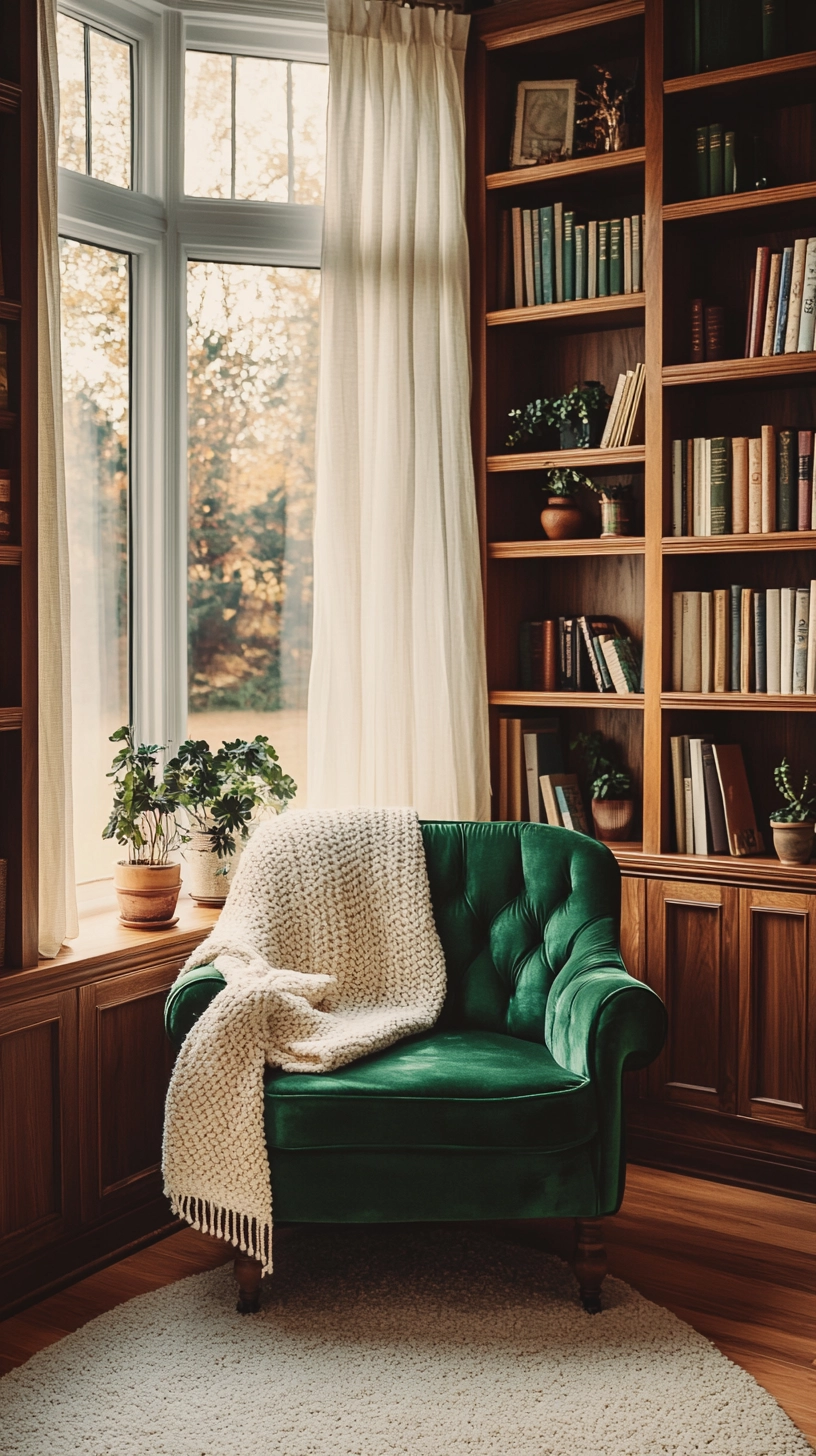
Measure the nook in five minutes
- Arrange the chair, side table, ottoman and lamp in their intended positions.
- Measure the outer footprint of the pieces you want the rug to connect.
- Mark a possible rug rectangle using painter’s tape.
- Check door swings, walking paths, floor vents and furniture stability.
- Test the marked layout by sitting down and standing up before buying.
Should chair legs sit on or off the rug?
Both approaches can work. Having all four chair legs on the rug creates a defined zone and avoids uneven chair support. A front-leg arrangement can work if the rug is thin enough to keep the chair stable. For a chair and ottoman, a rug large enough for both usually feels more cohesive. Ensure the rug cannot slide or bunch under the furniture.
Choose a material that fits everyday use
Wool can feel comfortable and resilient, but maintenance depends on its construction. Flatweave cotton and low-pile synthetic rugs may be easier to manage in tight spaces. Thick shag can add softness but may interfere with doors, small tables or furniture stability. Check the care instructions, shedding characteristics and rug pad compatibility.
Use color and shape to define the corner
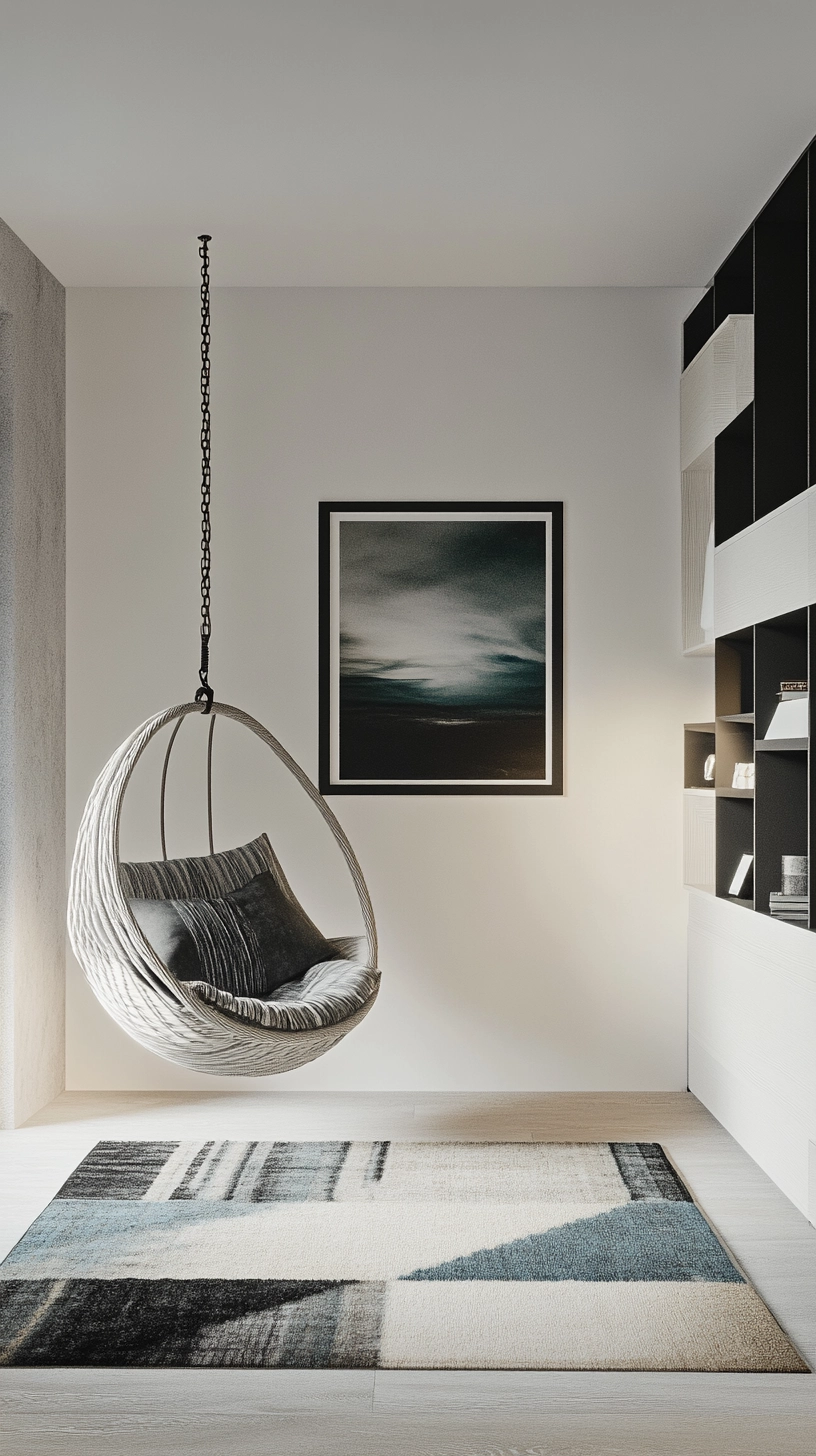
A rectangular rug works naturally alongside a wall or bookcase. A round rug can soften a corner with a curved armchair. Choose a palette that relates to the room rather than matching every fabric exactly. In a small room, a quiet pattern can keep the floor from feeling crowded; a bolder rug can become the focal point of a larger nook.
Avoid these common sizing mistakes
- Choosing a tiny mat that floats away from the chair.
- Buying a large rug that obstructs a door.
- Forgetting the ottoman or footrest footprint.
- Placing an unstable side table partly on a thick rug.
- Skipping a suitable non-slip rug pad on a smooth floor.
Frequently asked questions
Can I use a round rug? Yes. Mark the diameter on the floor and check that the chair and walking space remain comfortable.
Do I need a rug in a carpeted room? No. A rug can add visual definition, but avoid layering rugs if they slip, wrinkle or create a trip risk.
What if my nook is very narrow? Consider a runner or leave the floor uncovered and add warmth through cushions and a throw instead.
For more ideas on furnishing your corner, explore our cozy reading nook ideas and bedroom reading nooks.